Glass is the wrong choice on paper. It costs several times what a plastic bottle costs. It weighs enough to matter when you are carrying tables and inventory to a market at six in the morning. And every so often one slips and you are sweeping honey and glass out of the back of a vehicle.
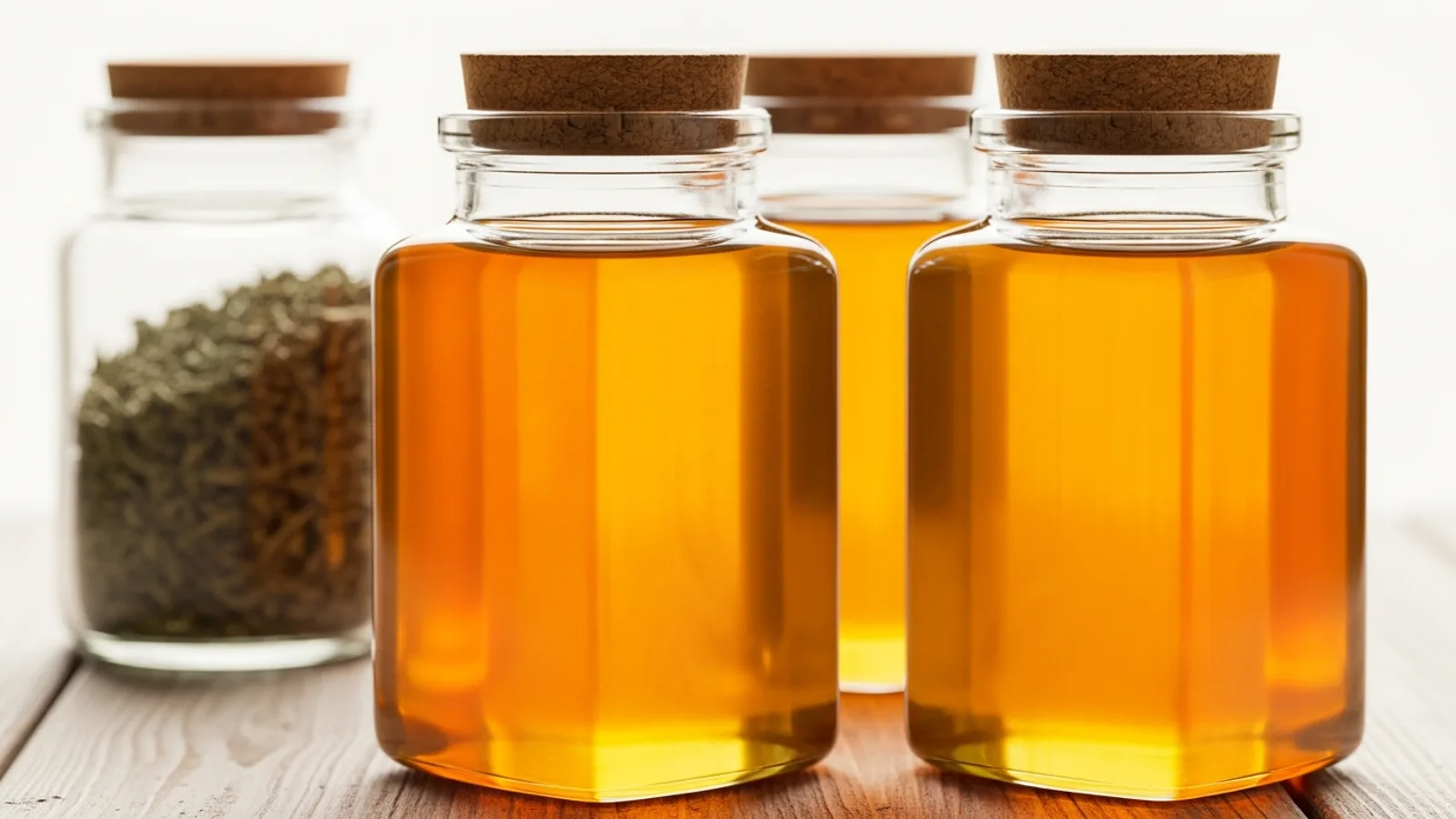
We use it anyway, and the Muth jar in particular. Here is the reasoning, including the parts that are about sentiment rather than science.
What Is a Muth Jar?
The shape is not a modern design choice. Charles F. Muth was a beekeeper and bee supply dealer in Cincinnati in the second half of the nineteenth century, and the square-shouldered, cork-topped jar he sold honey in became the standard for the American honey trade. Beekeepers have been using some version of it for roughly a hundred and fifty years.
The cork is functional rather than decorative. It seals well enough for a product that resists spoilage on its own, and it opens and closes without a metal thread that corrodes when honey gets into it.
Why Does Glass Suit Honey Specifically?
Honey is both acidic, generally sitting between pH 3.4 and 6.1, and hygroscopic, meaning it pulls moisture out of the air around it. Those two properties make the container a real variable rather than an afterthought.
Glass is inert. Nothing moves from the jar into the honey regardless of how long it sits or how warm the room gets, and Florida rooms get warm. Plastic is more permeable to moisture and to air than most people assume, and honey that gains water content over time is honey that can eventually ferment. For a raw product with naturally higher moisture than the pasteurized kind, that margin matters.
Glass is also completely neutral to smell and taste. Honey picks up aromas readily. A jar that has been sitting in a warehouse absorbing the smell of its own packaging is a real thing, and it is not a problem glass has.
The Part That Is About Reuse
A Muth jar outlives its honey. Customers bring them back to the market, and we see them used for spices, for loose tea, for screws in a garage, and once for someone's sourdough starter.
I am wary of overclaiming here. Glass is heavier to transport than plastic, and manufacturing it is energy intensive. If a jar is used once and goes into a bin, the environmental case for it over plastic is not clear-cut, and I am not going to pretend otherwise. The case rests on the jar being kept, and the honest reason to choose it is that a container people want to keep is a container that gets kept.
Why This Works for Us and Might Not for Everyone
We can make this choice because of a different decision we already made: we do not ship our honey. Every jar is handed to someone at a farmers market in Sarasota or Manatee County. Nothing goes into a box, onto a truck, or through a sorting facility.
Remove shipping from the equation and glass loses most of its disadvantages. The weight is our problem for the length of a drive, not a cost passed along in postage, and the breakage risk stays within arm's reach where we can manage it. A beekeeper who ships nationwide is solving a different problem and may well be right to reach for plastic.
Ours stays local, so the jar can be the good one.