We get the question all the time. "Can I order your honey online?" "Do you ship?" "My sister in Ohio would love a jar. Can you send it to her?"
The answer is always the same, and it is always a little hard to say: No, we do not ship our honey. It is not because we do not want to. It is because we care too much about what is inside the jar to risk what happens to it once it leaves our hands.
What Makes Raw Honey Different
Most honey on store shelves has been pasteurized, meaning it has been heated to around 150 to 170 degrees Fahrenheit. Pasteurization kills yeasts, delays crystallization, and gives honey that perfectly clear, syrup-like consistency that looks appealing under fluorescent lights. It also destroys many of the things that make honey worth eating in the first place.
Our honey is raw. It is never heated above the natural temperature of the hive, which stays around 95 degrees Fahrenheit. That means our honey retains its full complement of natural enzymes like diastase and invertase, its antioxidants, its trace pollen, and its delicate floral character. These are living, active compounds. They are the reason people seek out raw honey, and they are also the reason raw honey requires more care.
The Problem with Shipping
A shipping truck in July can reach interior temperatures well above 130 degrees Fahrenheit. Even a standard delivery van sitting in a Florida parking lot can exceed 120 degrees within minutes. At those temperatures, the enzymes that distinguish raw honey from the processed kind begin to break down. Prolonged exposure above 95 to 115 degrees degrades diastase activity, darkens the honey through a chemical process called the Maillard reaction, and can alter the aroma and flavor profile that took our bees an entire season to create.
On the other end of the spectrum, cold temperatures during transit trigger rapid crystallization. When honey is stored between 50 and 59 degrees Fahrenheit, glucose molecules separate from the water content and form crystals. Crystallized honey is perfectly safe to eat, but customers who receive a jar of solid, grainy honey in the mail tend to think something has gone wrong. The experience does not reflect the care we put into every batch.
There is also the issue of moisture. Raw honey that has not been heavily processed can have slightly higher moisture content than its commercial counterparts. If that honey is then subjected to heat during transit, the risk of fermentation increases. Fermented honey has a sour, off-putting taste and a slightly fizzy quality that is a far cry from the clean sweetness of a fresh jar.
We Cannot Control What Happens in Transit
The core issue is control. From the moment we extract our honey to the moment we hand it to a customer at the market, we know exactly how it has been stored. We keep it at a stable, cool room temperature in our production space. We bottle it fresh. We never let it sit in a hot car or a cold warehouse.
The moment we hand a jar to a shipping carrier, we lose that chain of custody. We cannot guarantee the temperature inside a delivery truck. We cannot prevent a package from sitting on a hot porch for four hours in August. We cannot ensure that it does not spend two days in a frigid sorting facility in January.
Our Honey Sells Out Locally
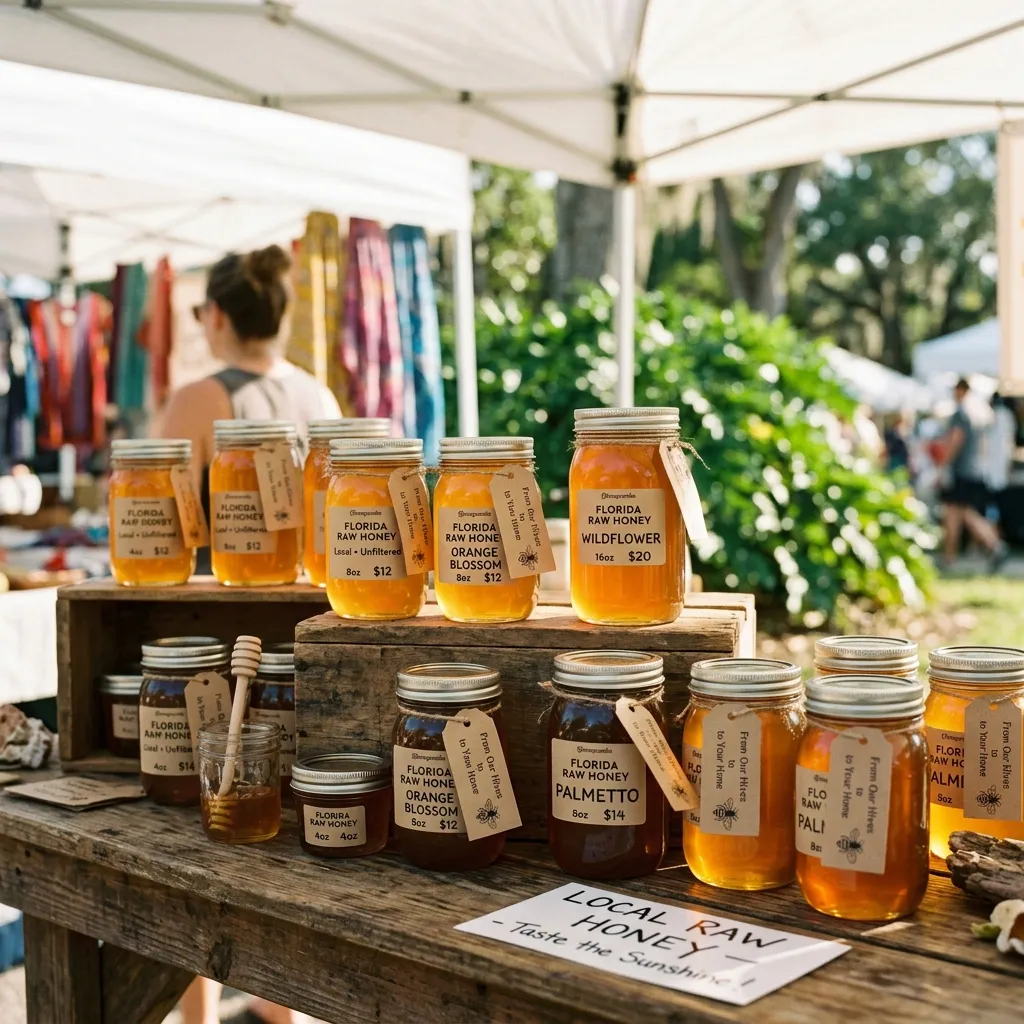
The other reality is simpler than the science: we do not have enough honey to ship. Our bees produce a limited quantity each season, and every batch sells out within the Sarasota, Manatee, and greater Gulf Coast region. Our regulars at the Bradenton Farmers' Market, the Sarasota Farmers Market, and the Lakewood Ranch Farmers Market know to come early because once a batch is gone, it is gone until the next harvest.
That local demand is something we are grateful for every single day. Our neighbors trust us. They know our bees. Some of them have watched our operation grow from a small hobby into what it is today. Shipping our honey to strangers across the country would mean our local community, the people who supported us from the beginning, might not get the jar they have been waiting for.
We would rather sell every jar face to face, where we can look a customer in the eye and tell them exactly when it was harvested, what the bees were foraging on, and how it was handled. That conversation is part of the product.
How Can You Get a Jar?
If you are in the Sarasota or Manatee County area, the easiest way to get our honey is to visit us at one of our local farmers markets. We attend weekly, and our schedule is listed on our market schedule page.
If you want to guarantee your jar before a batch sells out, we also offer batch reservations. You can reserve your honey in advance, and we will have it ready for you to pick up at the next market or arrange a local pickup. It is the best way to make sure you never miss a harvest.
We know it can be frustrating if you are outside our area. We have had people drive from Tampa, Fort Myers, and even Jacksonville to pick up a few jars. That means the world to us. But we would rather be honest about our limitations than compromise on the quality that earned that kind of loyalty in the first place.