The question comes up at almost every market. Someone picks up a jar, turns it over, and asks whether they can bake with it. They can. Honey behaves beautifully in a hot oven. But the answer I usually give is longer than the one they expected, because baking with raw honey and buying raw honey are slightly at odds with each other.
Raw honey costs more than the honey in the squeeze bear because of what has not been done to it. It has not been pasteurized, filtered under pressure, or heated to keep it clear on a shelf. What survives that restraint is a set of fragile things: enzymes like diastase and invertase, trace pollen, antioxidants, and the floral character that tells you which season and which corner of Manatee County the bees were working. Every one of those is sensitive to heat.
So if you are going to spend money on raw honey, it is worth knowing which uses preserve what you paid for. These three do.
1. Honey and Citrus Vinaigrette
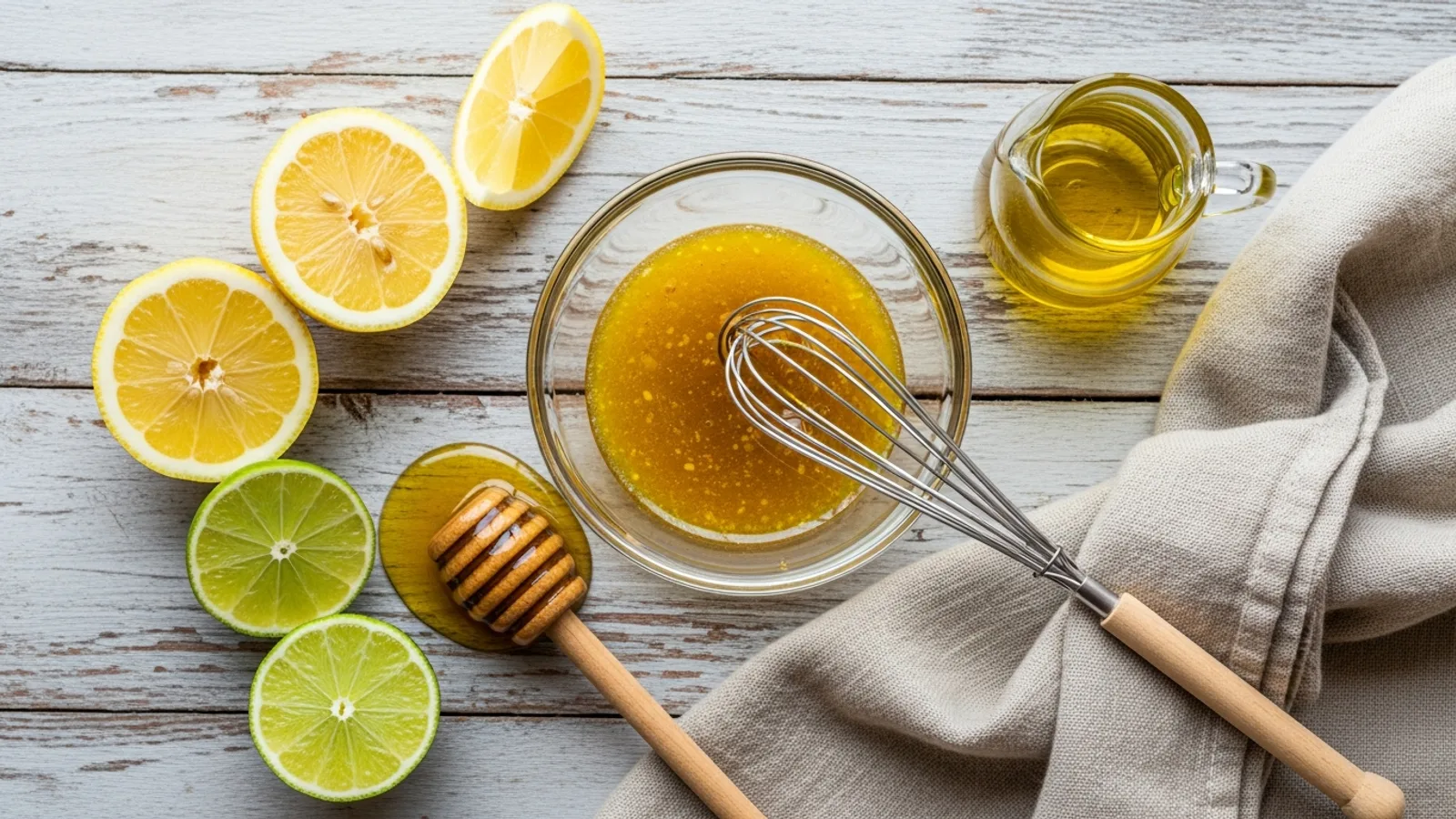
This is the recipe I make most often, and it is the one that converts people. Raw honey is an emulsifier as well as a sweetener, which means it holds oil and acid together without any help from mustard or egg.
Combine two tablespoons of raw honey, the juice of one lemon or two limes, a quarter cup of good olive oil, a pinch of salt, and a few grinds of pepper. Whisk or shake in a jar until it thickens slightly and turns opaque. That opacity is the emulsion holding.
The honey never goes near heat, so the floral notes stay legible. A citrus-season honey in a citrus dressing is genuinely a different experience from the same dressing made with supermarket honey. If your honey has crystallized, let the jar sit in warm tap water for a few minutes first, or simply whisk a little harder.
2. Whipped Honey Butter
Let one stick of unsalted butter come fully to room temperature. Do not microwave it, and do not melt it. Whip it with a fork or a hand mixer until it is pale and airy, then fold in three tablespoons of raw honey and a small pinch of flaky salt.
The butter has to be soft rather than melted, which is the whole trick. Melted butter runs about 95 degrees or higher and will thin the honey into a syrup that separates as it cools. Softened butter stays under that line and holds the honey suspended.
It keeps in the refrigerator for two weeks and belongs on cornbread, sweet potatoes, or a biscuit. This is also the single best way to use a honey whose flavor you find too assertive on its own.
3. A Cheese Board With Honey and Pecans
This is barely a recipe, which is the point. Raw honey drizzled over a sharp aged cheese is one of the oldest good ideas in food, and it asks nothing of you.
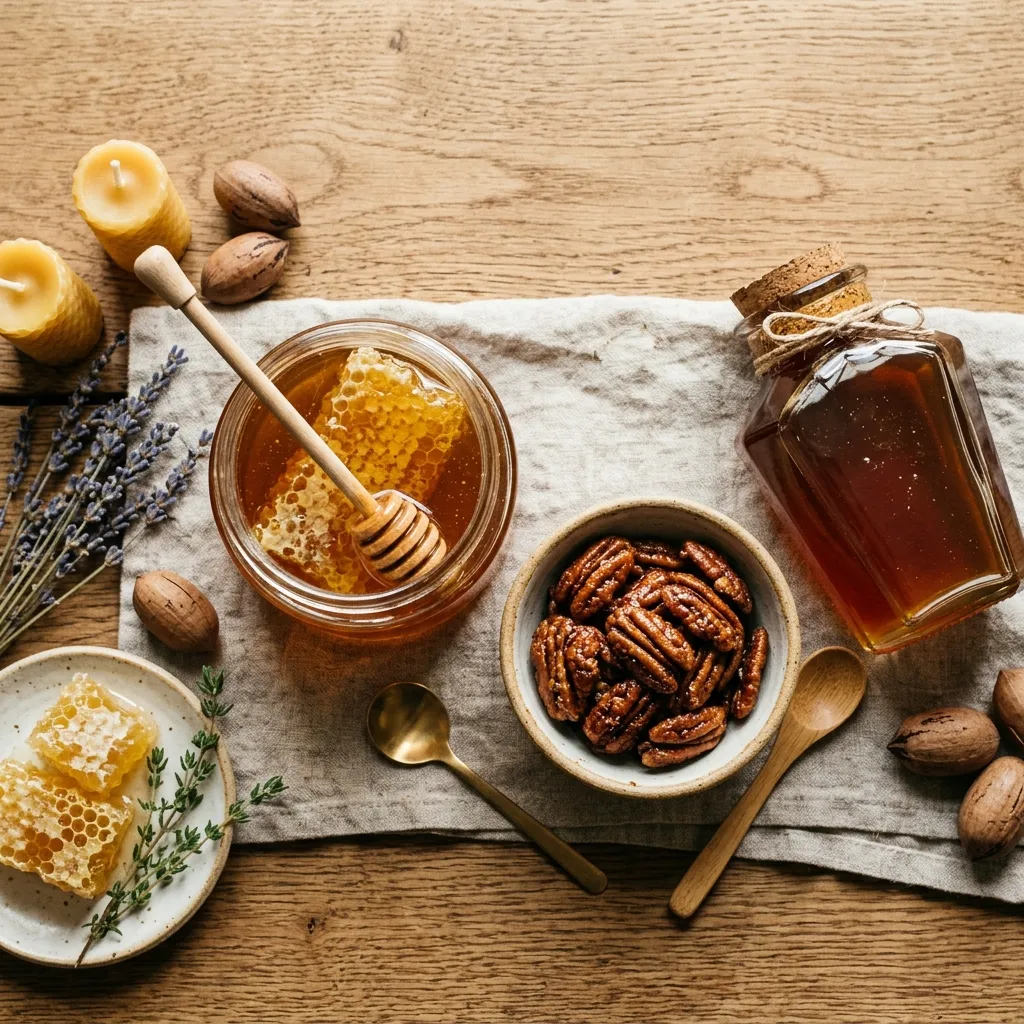
Aged cheddar, manchego, or a blue all work. Pour the honey over the cheese just before serving rather than in advance, so it sits on the surface instead of soaking in. Add honey glazed pecans for texture and something acidic, a few apple slices or pickled onions, to keep the whole plate from reading as sweet.
Because nothing is heated and nothing is diluted, this is the arrangement where you taste the honey most clearly. If you have ever wondered whether local honey really does taste different from the jar at the grocery store, put both on the same board and find out.
What About Baking?
Bake with honey whenever you want to. It browns well, holds moisture, and makes excellent bread. Just use an ordinary pasteurized honey for it, and keep the raw jar for the things above.
I would rather someone use our honey in a way that shows it off than feel obliged to put it in a 350 degree oven out of respect. The bees did specific work in a specific season. These three recipes let you taste it.