Honey is an easy gift to give badly. It is also, given ten minutes of thought, one of the better things you can hand someone who already owns everything.
The difference is almost entirely in the choosing and the explaining. Here is how I think about it, from the side of the table where the jars are.
When Is Honey the Right Gift?
It works when the person likes food and does not need another object. It is consumable, it does not ask for shelf space permanently, and it carries a story that a candle from a chain store does not.
It works especially well as a hostess gift, a thank-you, or a gift for someone in another state who grew up here. Local honey is one of the few things that is genuinely of a place.
It is the wrong gift for infants under twelve months, which is worth saying directly because it is a real safety matter rather than a preference. Raw honey can contain Clostridium botulinum spores that a developed digestive system handles without incident and an infant's does not. Never give honey for a baby, and mention it if you are giving to new parents who might assume otherwise.
Choosing Which Honey
Local beats exotic almost every time. A jar from thirty miles away that tastes like where it came from is more interesting than an imported varietal the recipient cannot place. If the person lives here, local honey is familiar in a way they will notice. If they moved away, it is the taste of home.
Season matters more than most people realize. Honey pulled in spring in Florida is lighter and more floral. Later in the year, when Brazilian pepper is blooming, it is darker and more assertive. If you know the recipient likes strong flavors, ask which season a jar came from. Any beekeeper worth buying from will know.
For someone new to raw honey, choose the milder one. An intense varietal is a wonderful gift for an enthusiast and slightly wasted on someone whose reference point is a plastic bear.
Presentation Without Fuss
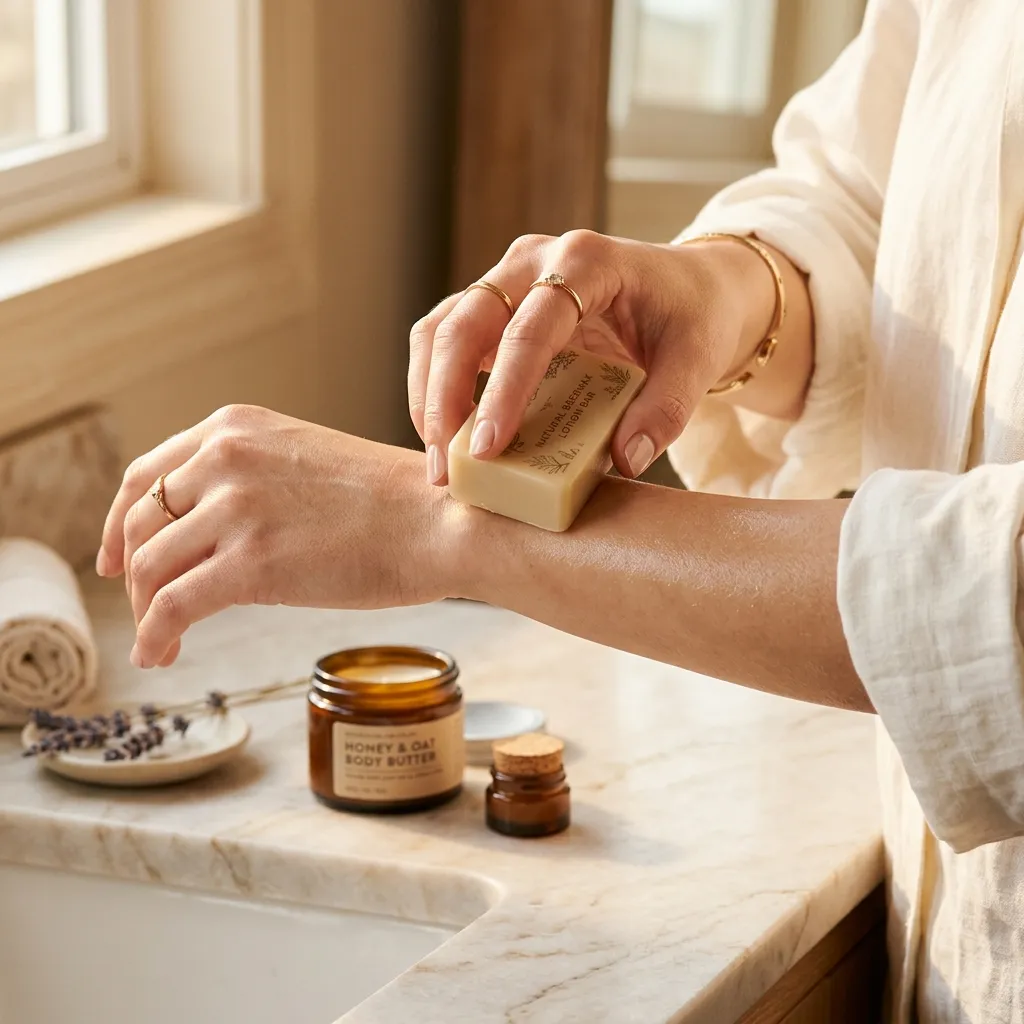
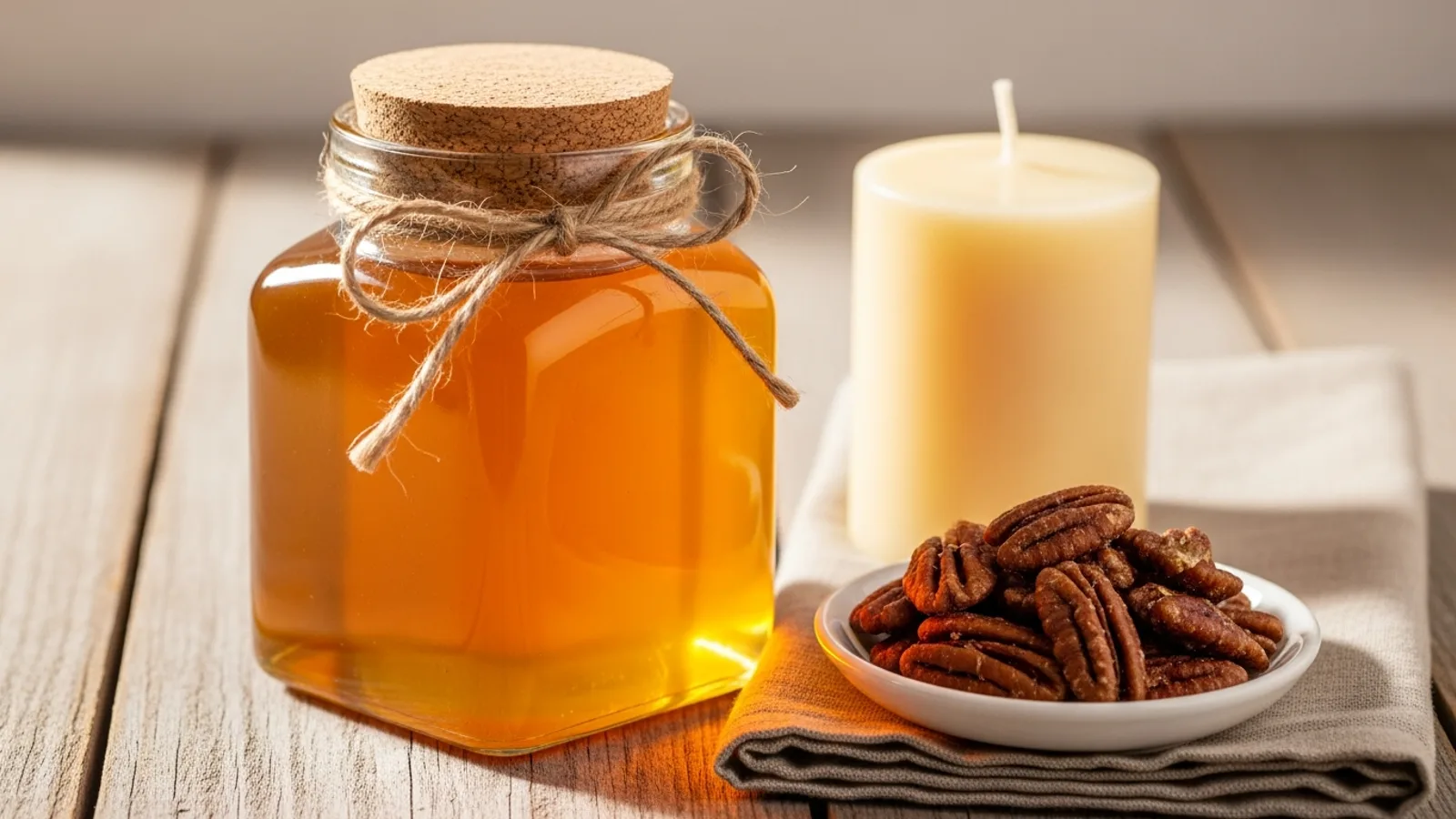
A Muth jar does most of the work. The cork-topped shape has been the honey trade's standard since the eighteen hundreds and it reads as a gift without any wrapping at all. Tie something around the neck of it if you like, but it does not need much. For bigger occasions, the Total Body Bundle pairs the facial balm, body butter, and lip balm in a felted wool pouch and needs no wrapping either.
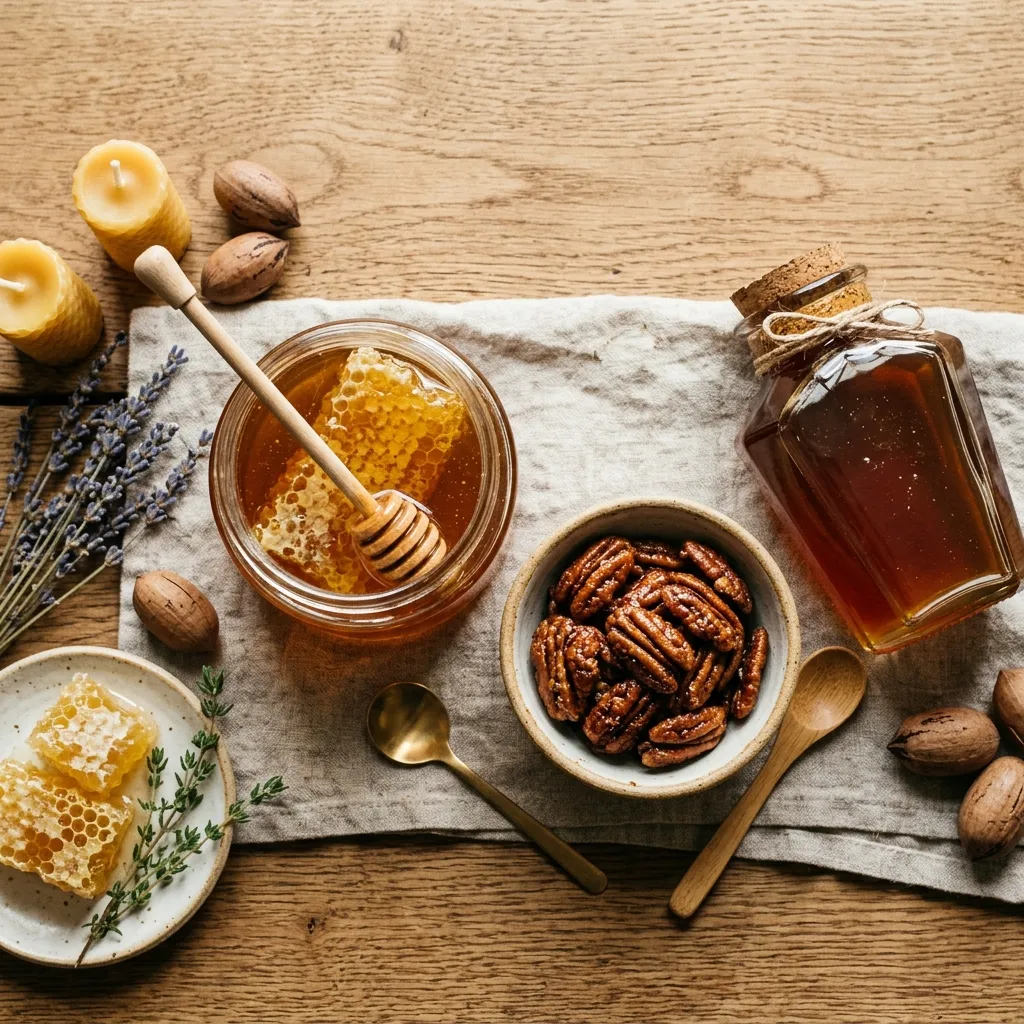
If you want to build it out, the pairings that actually get eaten are honey glazed pecans and a good sharp cheese. A beeswax candle alongside makes it feel considered, and it comes from the same hive as the honey, which is a nice thing to be able to say. For someone who cares about skincare as much as honey, a natural skincare gift set belongs in the bag just as easily as the pecans do.
What Should You Say When You Hand It Over?
Say where it is from and who kept the bees. Say that it is raw, which means it was never heated, and that this is why it tastes like something rather than just tasting sweet. Say it will crystallize and that warm water will bring it back.
That is roughly thirty seconds of talking and it changes the gift from a jar of honey into a jar of honey from a particular place, made a particular way, that the recipient now knows how to look after. The honey was always going to be good. The context is the part you add.