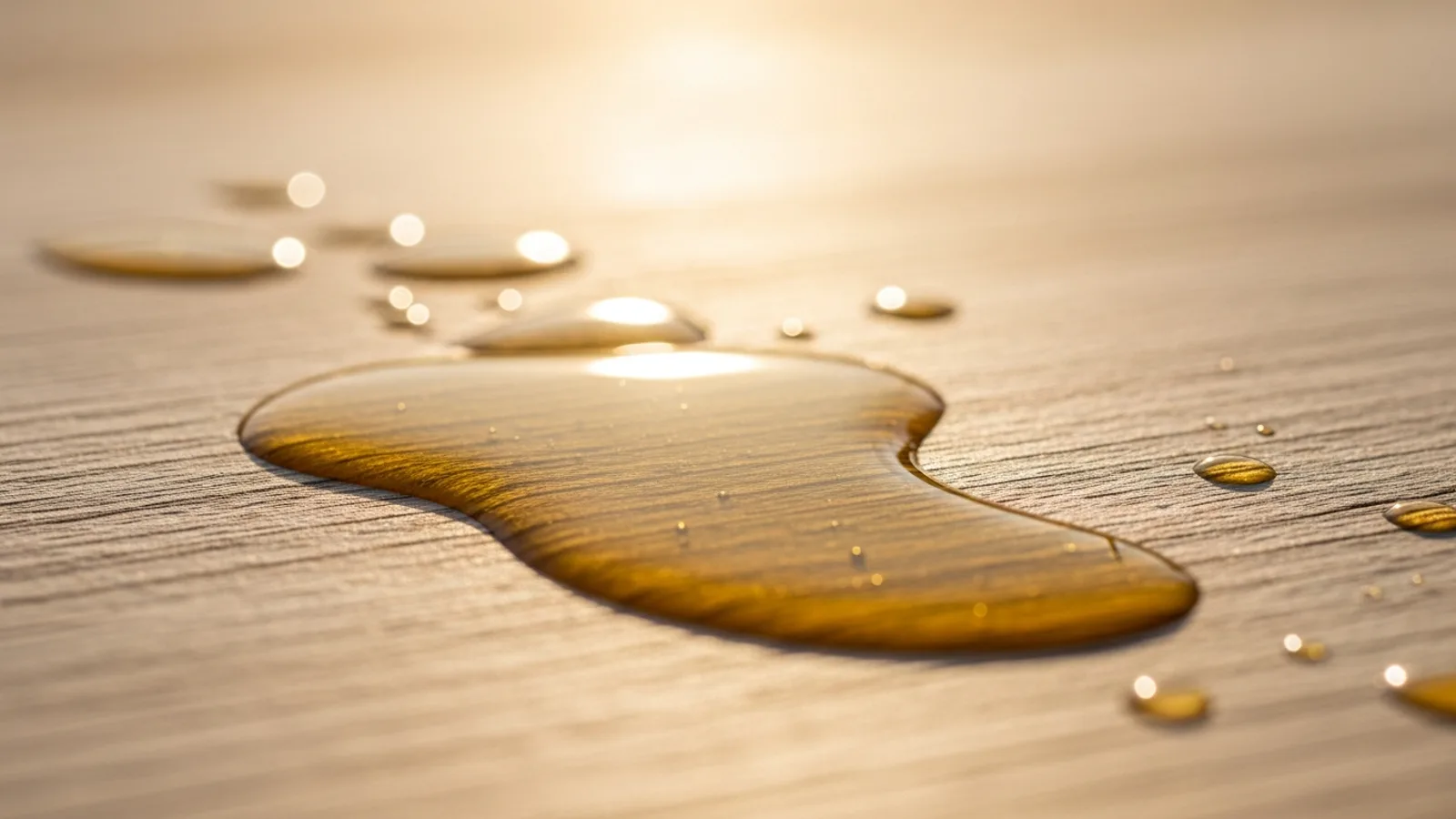
There is a difference between pouring water into something and building walls strong enough to hold it.
I learned that in the apiary long before I understood it in skincare. Honey is hygroscopic. It draws moisture from the air. Yet without the structure of wax to contain it, that moisture would never remain stable. The hive depends on architecture as much as it depends on nourishment.
Our skin is not so different.
When I began formulating oil-based skincare, it was not because I dismissed water. Water is life. Our skin cells are composed largely of it. But I became increasingly aware that many people were layering water onto skin that did not have the structure to retain it. They were hydrating repeatedly, yet still feeling dry.
Oil-based skincare works differently because it focuses on retention rather than addition.
How Water-Based Products Work
Most conventional skincare products are water-based. They begin with water as the primary ingredient, then include humectants such as glycerin or hyaluronic acid to attract more water to the skin. These formulations can feel refreshing and lightweight. They often absorb quickly. There is real value in that immediate comfort.
But water evaporates.
Without sufficient lipids to slow transepidermal water loss, much of that added hydration dissipates into the air. Especially in dry climates or heated indoor environments, the skin can feel hydrated for a moment and then tight again shortly after.
That cycle is common.
Restoring the Lipid Matrix
Oil-based skincare approaches the problem from another angle. Instead of flooding the surface with water, it strengthens the lipid layer that keeps existing water inside the skin. The outermost layer of our skin relies on a mixture of ceramides, cholesterol, and fatty acids to maintain integrity. When that lipid matrix is compromised, water escapes more rapidly.
Oils and butters help replenish and reinforce that matrix.
They do not hydrate in the way water does. They do not increase water content directly. What they do is reduce the rate at which water leaves.
This distinction is subtle but important.
When I formulate without water, I am choosing to prioritize barrier structure. Every ingredient must serve a lipid-supporting role. Plant oils provide fatty acids. Butters contribute density and nourishment. Beeswax creates a breathable seal that slows evaporation without creating a rigid mask.
How It Feels Different
The experience on the skin is different as well.
Water-based products often feel cool and fleeting. Oil-based products feel grounding. They move more slowly. They require the warmth of the hands. They invite a moment of contact rather than quick absorption. For some, this feels unfamiliar at first. We have been conditioned to equate fast absorption with effectiveness.
But absorption is not the only measure of performance.
Do Oils Clog Pores?
There is also a misconception that oils simply sit on top of the skin and clog pores. In reality, well-chosen oils have varying molecular weights and fatty acid profiles. Some are lighter and more penetrative. Others remain closer to the surface. The balance determines how the product behaves.
An oil-based balm, properly formulated, should soften into the skin and leave it supple rather than slick. It should reduce tightness and increase flexibility. It should not feel suffocating.
Skin that is oily can still be dehydrated. This is another point of confusion. Dehydration refers to a lack of water. Oiliness refers to sebum production. When we strip oily skin aggressively, the barrier becomes compromised, and the skin may produce even more sebum to compensate. Supporting the barrier gently can sometimes calm that cycle.
Oil-based skincare is not about adding grease. It is about restoring balance.
What Changed for My Own Skin
As I have matured, my own skin has become thinner and more prone to dryness. I no longer chase the sensation of squeaky cleanliness. I look for comfort. When I apply a small amount of an oil-based balm to slightly damp skin, I can feel the shift. The surface becomes more resilient. The tightness fades.
Not because I have added water.
Because I have prevented its loss.
This is why I often encourage people to apply oil-based products to skin that is still slightly damp from cleansing. The water is already present. The oil-based layer simply helps keep it there. It is a partnership between hydration and protection rather than a replacement of one with the other.
When Is Water-Based the Better Choice?
There are, of course, situations where water-based formulations are appropriate. In very humid climates, or for those who prefer extremely lightweight textures during the day, a water-based serum can feel more comfortable. I respect that. Skincare does not require extremes. It requires attentiveness.
My own work at Goodfriend Honey Co. centers on water-free formulations because I want to remove unnecessary dilution and focus entirely on supportive lipids. A balm like Fix Your Face Silken Glow Balm is designed to function as a structural ally to the skin. It is not meant to overwhelm it with actives or trends. It is meant to reinforce what the skin already knows how to do.
The hive has always guided me in this way.
Bees do not constantly add more moisture to honeycomb. They build walls strong enough to preserve what is inside. That philosophy shapes every formula I create.
Oil-based skincare works differently because it respects the architecture of the skin. It prioritizes retention over repetition. It supports the barrier so that hydration becomes sustainable rather than temporary.
When the structure is sound, the contents remain steady.
And that steadiness is what healthy skin truly feels like.