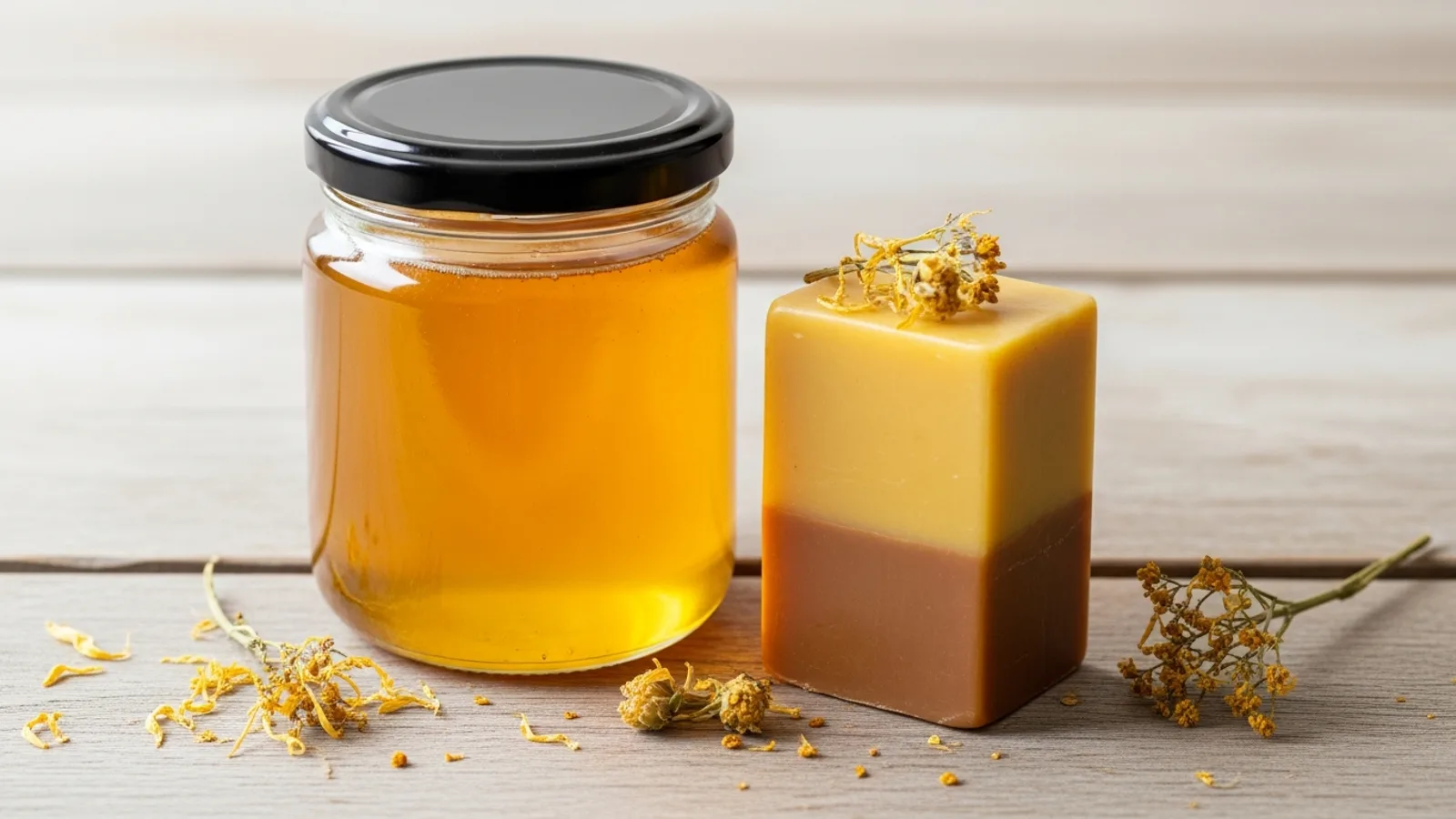
One of the most common questions I receive is about preservatives. It is usually asked carefully, sometimes with concern. If there are no preservatives, how is the product safe? If other brands use them, why don’t you?
It is an important question. And it deserves a clear answer.
This Is Not About Fear
I do not avoid preservatives because I believe they are harmful or unnecessary in all circumstances. Preservatives serve a critical role in many formulations, especially those that contain water. Water creates an environment where bacteria, mold, and yeast can grow. In those cases, a broad spectrum preservative is not optional. It is responsible formulation.
My decision is not about fear. It is about structure.
How Honey Preserves Itself
As a beekeeper, I have spent years observing how honey preserves itself. Honey remains stable not because something was added to it, but because its water content is low and its environment is inhospitable to microbial growth. Bees also seal it with wax, further protecting it from excess moisture and contamination.
Stability comes from composition.
Why Is Water the Deciding Factor?
When I began formulating skincare, I chose to work without water. A water free balm or butter does not provide the same environment for microbial growth that a water based cream does. Without water, bacteria and mold have far less opportunity to thrive. That changes the preservation requirements entirely.
It is a structural decision, not a marketing one.
Many conventional creams must include preservatives because they contain water. That is appropriate and necessary. In my formulations, because I exclude water, I am able to rely on the inherent stability of oils and beeswax when they are handled properly and produced in small batches.
This does not mean preservation is ignored. It means it is approached differently.
How Preservation Still Happens
Ingredient selection becomes even more important. I choose oils with strong oxidative stability. I pay attention to shelf life. I produce in quantities that allow for freshness. I store raw materials carefully. I formulate with intention so that each jar remains stable within its expected use period.
Good manufacturing practices are part of preservation.
A Misconception Worth Correcting
There is also a misconception that natural or water free products are automatically unsafe. That is not true. Safety depends on formulation design, hygiene during production, packaging, and how the product is used. A properly formulated balm, free of water and used with clean hands, can remain stable and safe without traditional preservatives.
Again, the key is water.
Preservatives Are Essential Elsewhere
I respect brands that formulate with water and use preservatives responsibly. That is not a flaw in their philosophy. It is simply a different design choice. My approach is rooted in what I have learned from the hive. Reduce excess moisture. Protect what remains. Build structure that resists breakdown.
In that environment, preservation is inherent.
What Simplicity Buys
There is also something I appreciate about simplicity. When you remove water, you remove the need for emulsifiers. When you remove emulsifiers, you often reduce the number of supporting ingredients required to keep a formula stable. The result can be a shorter, more focused ingredient list.
Not minimal for appearance, but purposeful in composition.
As I have matured in both beekeeping and formulation, I have become more attentive to stability over spectacle. I do not want products that rely on complexity for their performance. I want products that are stable because they are thoughtfully constructed.
At Goodfriend Honey Co, that means formulating without water and without traditional preservatives, not out of fear, but out of structural logic. Beeswax provides protection. Oils provide nourishment. The formula works as a cohesive whole.
Preservatives are essential in many contexts. They protect consumers and ensure safety in water based systems. I simply design my products in a way that does not require them.
The hive taught me that stability is not always about adding more. Sometimes it is about building wisely from the beginning.
That philosophy guides every jar I make.