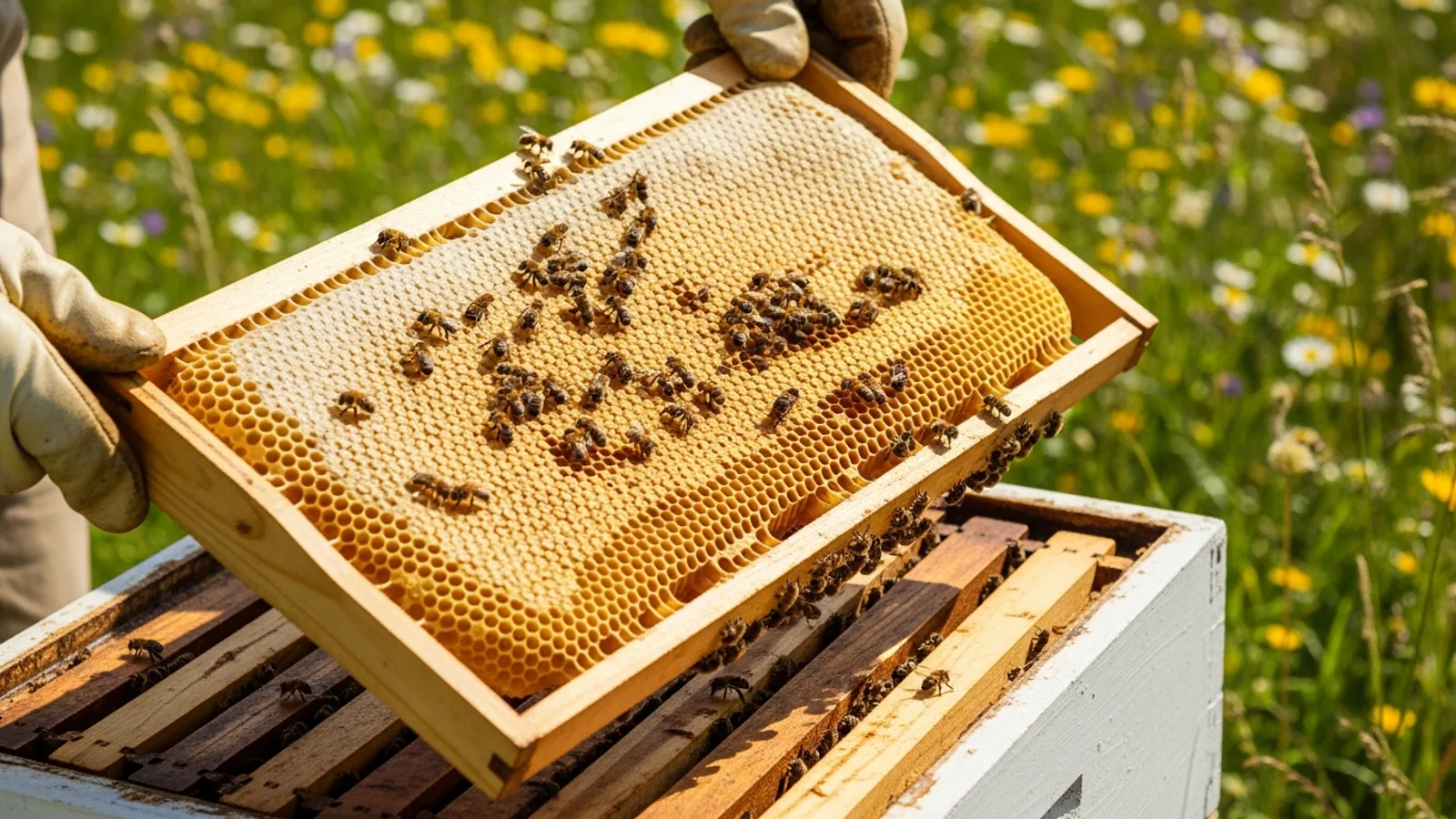
There is a moment when you open a hive and the sound tells you everything. A steady, low hum means the colony is settled. A sharp, frantic pitch means something is wrong. Ethical beekeeping begins with listening.
Before honey, before wax, before any product leaves my hands, there is a living colony depending on careful stewardship. Ethical beekeeping is not a certification to me. It is a posture of restraint.
Putting the Colony First
At its core, ethical beekeeping means placing the health of the colony above yield. Bees are livestock in a technical sense, but they are also wild in their instincts and complex in their social structure. A colony functions as a superorganism. The queen, workers, and drones are not independent actors. They are parts of a living whole.
When I approach a hive, I am entering their architecture and their climate controlled world. They regulate temperature within a few degrees. They manage humidity precisely. They organize brood, pollen, and honey stores with intention. Ethical practice means I disrupt that balance as little as possible.
Intervention should always have purpose.
How Much Honey Should You Take?
One of the clearest markers of ethical beekeeping is how honey is harvested. Bees produce honey as their primary food source. In strong nectar flows, healthy colonies often create surplus beyond what they need. Ethical harvesting means taking only that surplus and ensuring the bees retain adequate stores for winter or dearth periods.
In colder regions, this decision is critical. A colony without enough honey will not survive winter. Supplemental feeding with sugar syrup can prevent starvation, and many responsible beekeepers use it when necessary. But it is not a replacement for leaving sufficient natural stores when possible.
The goal is resilience, not maximum extraction.
Hive Management and Growth
Another component is hive management. Some beekeeping practices push colonies aggressively for production, replacing queens frequently, splitting hives rapidly, or transporting colonies long distances for pollination contracts. Commercial pollination is an essential part of modern agriculture, and I respect the scale and coordination it requires. But in my own apiary, I choose stability over expansion.
I allow colonies to build at a natural pace.
Queen health is central. The queen’s pheromones maintain social cohesion within the hive. Replacing her too frequently or without clear reason can disrupt colony dynamics. Ethical beekeeping involves observing performance and temperament over time rather than making changes solely for productivity.
Patience often produces stronger genetics in the long term.
Disease and Pest Management
Disease and pest management is another area where ethics matter deeply. Varroa mites, for example, are a significant threat to honey bee health worldwide. Ignoring them in the name of being hands off is not ethical. Responsible stewardship includes monitoring mite levels and intervening when thresholds are reached.
Treatment choices can vary. Some beekeepers use synthetic miticides. Others prefer organic acids or integrated pest management strategies. What matters most is thoughtful, informed action based on colony health, not neglect disguised as purity.
Care is active, not passive.
Habitat and Forage
Habitat also plays a role. Bees thrive where there is forage diversity. Ethical beekeeping includes supporting pollinator friendly planting and avoiding exposure to harmful chemicals whenever possible. While I cannot control every surrounding landscape, I can cultivate environments that offer varied nectar and pollen sources through the seasons.
Diversity strengthens immunity.
There are also quieter decisions that reflect ethics. Moving slowly during inspections. Avoiding unnecessary hive openings. Handling frames gently so brood is not crushed. Harvesting wax cappings carefully and returning intact comb so bees do not have to expend extra energy rebuilding.
Each small choice accumulates.
Does Ethical Mean Never Harvesting?
Some people assume that ethical beekeeping means never harvesting honey. Others believe it requires entirely hands off management. In reality, ethical practice exists between exploitation and neglect. Bees kept in managed hives rely on human oversight, particularly in regions where parasites and environmental pressures are high.
Doing nothing can be as harmful as doing too much.
Ethics extend beyond the apiary.
Output Versus Stewardship
There is a temptation in any craft to optimize for output. More jars. More hives. More volume. But ethical beekeeping asks a different question. What does the colony need to thrive over years, not just seasons?
That shift in perspective changes decisions.
I have learned that healthy colonies are calm. They overwinter well. They build steadily in spring. They are less reactive during inspections. Those qualities are not accidents. They are outcomes of consistent, attentive care.
Bees respond to stewardship.
In the end, ethical beekeeping is less about perfection and more about alignment. Alignment between what the bees are designed to do and what I ask of them. Alignment between harvest and sustainability. Alignment between craft and conscience.
It is a relationship built slowly.
And like any meaningful relationship, it requires listening, restraint, and the humility to remember that I am working alongside something living, not managing a machine.