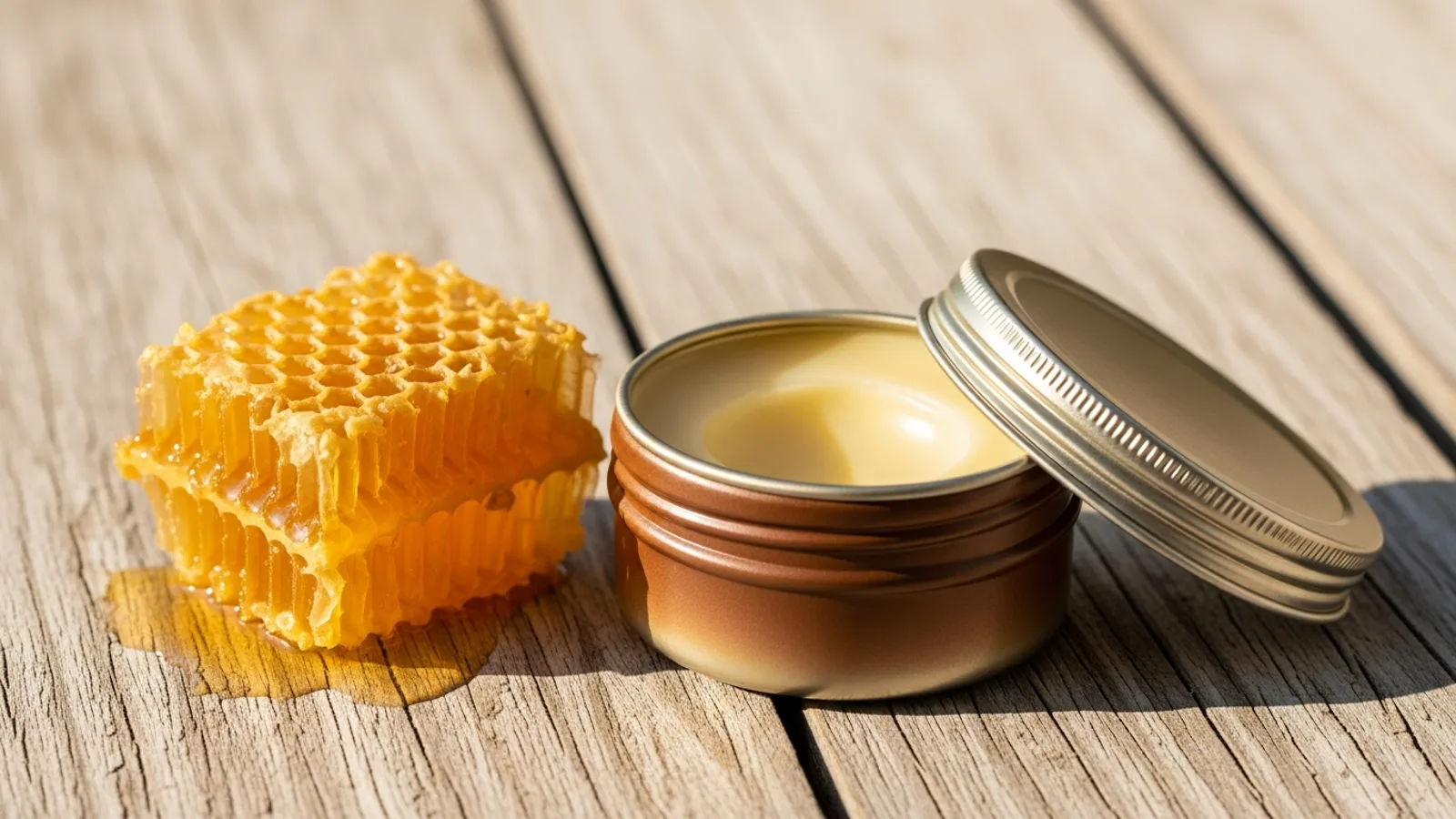
I did not come to skincare through a laboratory. I came to it through a hive.
Long before I was pouring balms or studying ingredient lists, I was standing in tall grass at the edge of wooden boxes filled with bees. I was learning how a colony regulates itself. How it builds structure. How it protects what matters most.
That education shaped everything that followed.
A hive is not chaotic, even though it hums with activity. It is precise. Beeswax is built cell by cell into perfect hexagons strong enough to hold pounds of honey. Nectar is gathered, transformed, and reduced in moisture until it becomes stable. The entire system depends on balance. Not excess. Not constant interference.
When I began paying closer attention to skincare, I noticed how different the rhythm felt. So many steps. So many promises. So many corrections layered on top of corrections. Brightening. Tightening. Resurfacing. Refining.
From a beekeeper’s perspective, I could not help but ask a simpler question.
What if skin, like a hive, thrives on structure and restraint?
Skin is a living barrier. Its job is to protect, regulate, and retain moisture. When it is functioning well, it feels comfortable. It is not constantly inflamed. It does not require constant adjustment. It holds what it needs.
In the hive, beeswax provides structure. It is firm, but it is not suffocating. It allows airflow while protecting what is inside. Honey remains stable because its moisture content is carefully controlled. The bees do not flood their hive with excess water. They reduce it. They seal it.
Those lessons changed how I think about hydration.
Many traditional creams are built around water. Water gives a product lightness and immediate absorption. It feels refreshing. But water evaporates. Without sufficient lipid support, that hydration is temporary.
In contrast, a balm begins with lipids. Oils that replenish what the skin naturally produces less of over time, and beeswax that slows moisture loss. Instead of adding water, the focus becomes protecting the water already present in the skin.
This is not about rejecting modern science. I respect the research and innovation behind many conventional products. There is real expertise in that world. But my path is grounded in observation.
Bees do not overcomplicate. They refine.
Over the years, I have watched my own skin mature. It no longer tolerates constant stimulation. It does not benefit from being pushed into renewal again and again. It responds best when its barrier is supported and left undisturbed.
That steadiness feels like health.
From a beekeeper’s perspective, strength is quiet. It is the hive surviving a winter because its stores were sufficient and its structure was sound. It is the colony adapting to seasonal shifts without collapse. It is resilience built slowly over time.
I believe skin deserves that same respect.
When I formulate at Goodfriend Honey Co, I am thinking about longevity. I want a jar that lasts. I want a product that requires only a small amount to be effective. I want ingredients that mirror the skin’s own composition rather than override it. If you are nearby and weighing your options, my notes on finding honest, locally made skincare in Sarasota may help.
Beeswax is not included because it is charming. It is included because it reduces moisture loss and reinforces the barrier. Every ingredient must earn its place.
There is humility in working with bees. You learn quickly that you are not in control of everything. Weather shifts. Nectar flows change. Colonies adapt. The best role you can play is supportive, not dominant.
That is how I see skincare.
We do not need to overpower the skin. We need to support it. We do not need to chase every new ingredient. We need to understand what our skin is signaling. Often it is asking for nourishment, for protection, for less disruption.
A beekeeper’s perspective is not flashy. It does not promise transformation overnight. It values patience. It trusts structure. It respects systems that have endured for centuries.
When I stand beside a hive, I am reminded that nature builds what it needs and nothing more. That principle guides every product I create.
Skincare, to me, is not about perfection. It is about preservation.
And that perspective began with bees.