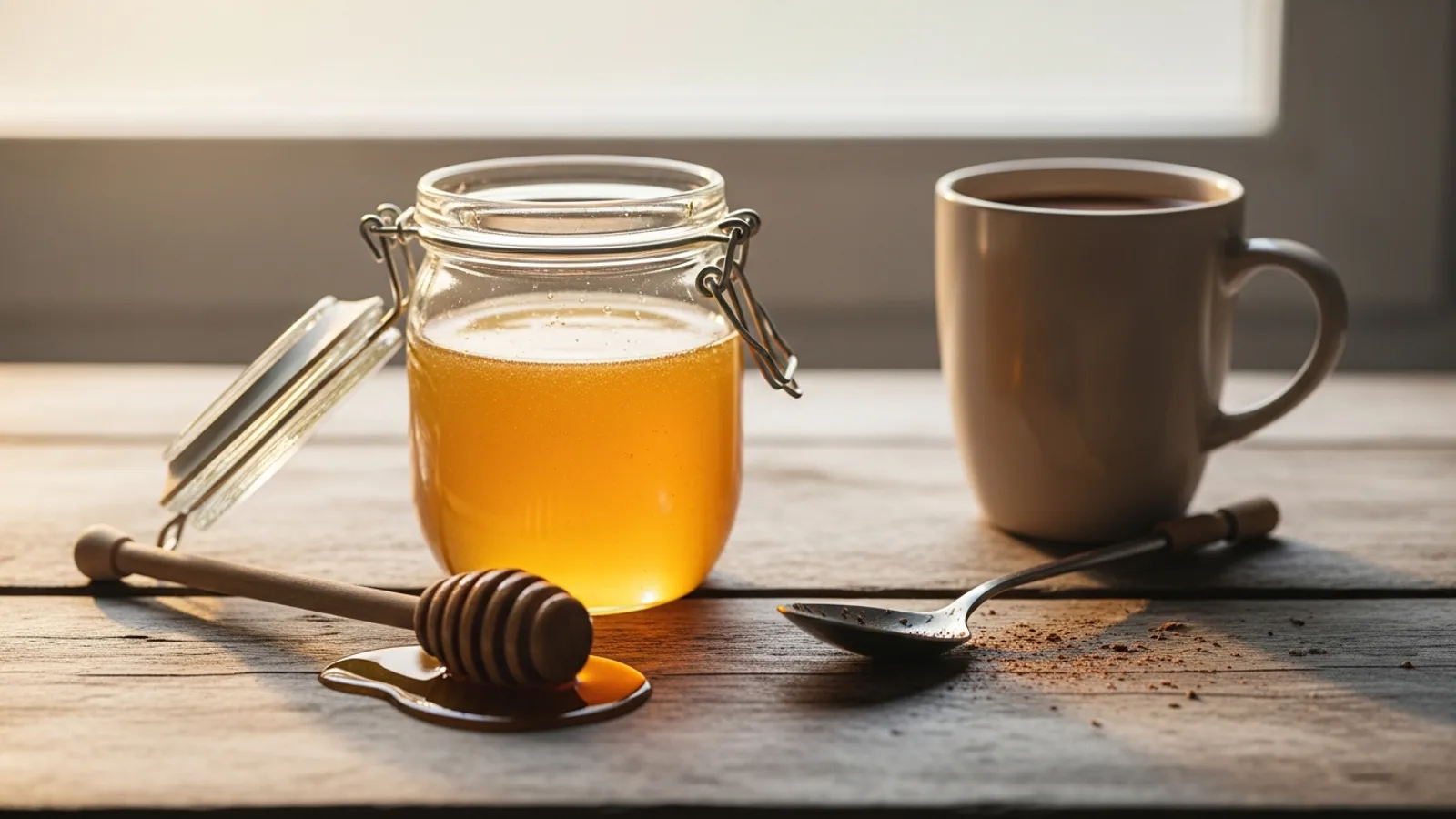
Most mornings, before I step outside to check the hives, I stand at my kitchen counter with a jar of honey and a spoon. The house is quiet. The light is soft. It is a small ritual, but it has substance behind it.
Why Mornings Specifically?
After a night of sleep, the body has been fasting for hours. Blood sugar is lower. Energy reserves are ready to be replenished. A spoonful of honey in warm water or tea offers glucose and fructose in a form the body recognizes easily. It is not a jolt. It is a gentle rise.
I notice the difference most on mornings when I am heading straight into physical work. Beekeeping is not passive. Lifting boxes, moving frames, standing in the sun. A small amount of honey before I begin gives me steady energy without feeling heavy.
Honey also interacts with digestion in a quiet way. Its natural sugars can stimulate saliva and digestive enzymes, helping the body transition from rest into activity. I am not interested in cleansing narratives or exaggerated promises. What I value is support. Something that works with the body rather than pushing it.
How I Actually Use It
Warm water with lemon and honey has become my default in colder months. The warmth hydrates. The honey soothes. The acidity of lemon brightens everything. It feels balanced.
There is also a broader nutritional context. Honey contains small amounts of antioxidants and trace compounds that come from the flowers the bees visited. These are not present in large doses, and I do not treat honey as a supplement. But they are part of what makes it more complex than refined sugar.
It carries the imprint of plants.
Local Honey and Allergy Season
Some people use local honey consistently during allergy season. The idea is that exposure to trace pollen may help the body acclimate over time. The research is mixed, and I prefer to speak carefully about that. Still, I have seen enough to understand why the practice continues.
What matters to me is proportion. Honey is still sugar. Its value lies in moderation and quality. A spoonful incorporated into a balanced breakfast is very different from relying on sweetness throughout the day.
When I reach for honey, I know where it came from. I remember the weather during that harvest. I remember whether the clover was abundant or whether late summer ran dry. That familiarity changes how I use it. It is not anonymous.
Starting the morning with honey is not about ritual for ritual’s sake. It is about beginning the day with something whole, minimally handled, and biologically coherent. It offers steady energy, gentle digestive support, and a reminder that nourishment does not have to be complicated.
For me, that is reason enough to keep the jar within reach.