I have always worked in seasons.
Beekeeping does not allow for constant production. Honey flows when flowers bloom. Beeswax is drawn when the colony is strong. There are periods of abundance and periods of quiet. You learn to respect those rhythms.
That rhythm shaped the way I formulate skincare.
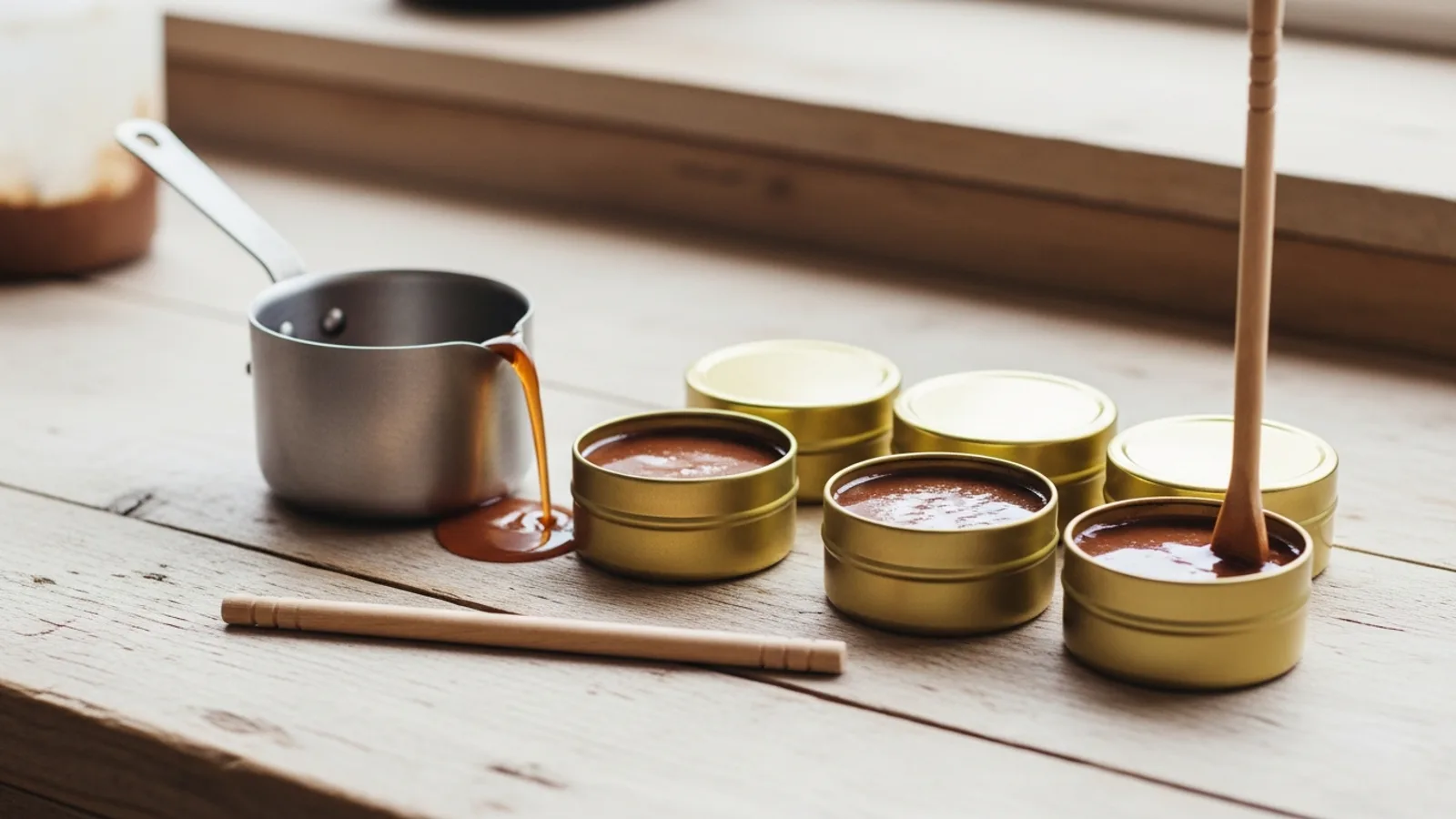
Small batch is not a marketing phrase for me. It is a natural extension of how I work. When I melt beeswax and butters, blend oils, and pour each jar, I am present with the ingredients. I notice their texture. Their scent. The way they move together. That attentiveness is difficult to replicate at scale.
What Changes at Scale
In large manufacturing, consistency is achieved through volume and automation. There is expertise in that world, and I respect it. But when production expands, ingredients are often sourced in bulk from multiple suppliers. Batches are stored longer. Formulas must be built to withstand extended warehousing and transport.
Small batch changes those conditions.
Freshness and Oxidation
When I produce in smaller quantities, ingredients move more quickly from blending to your hands. Freshness is easier to maintain. Oils are not sitting in storage for extended periods, beeswax is filtered and measured deliberately.
There is less distance between creation and use.
This matters more than many people realize. Natural oils can oxidize over time. Fragrance can fade. Texture can shift if ingredients are not handled properly. Small batch production allows for closer monitoring and adjustment. If something feels slightly off, it can be corrected before it becomes widespread.
Attention is easier when scale is human.
Knowing Your Ingredients
There is also an intimacy to small batch work. I know where my beeswax comes from because I harvest it or purchase it from other reputable beekeepers. I know the condition of the hives. I know how the honey was extracted. That connection informs every decision I make in formulation. Everything is poured by hand here in Bradenton, which is also why I put together a guide for anyone comparing local skincare options in Sarasota.
When you are close to your ingredients, you treat them differently.
Restraint and Waste
Small batch also encourages restraint. You cannot afford to waste materials or overproduce. Each ingredient must justify its place. Each jar must be poured with intention. That discipline keeps formulas focused.
In a world that often celebrates expansion, I have learned to value control.
What It Means for Your Skin
From the skin’s perspective, small batch matters because it supports integrity. Fresh oils are more stable. Carefully handled wax performs more consistently. A formula blended and poured in measured quantities tends to be more cohesive than one designed primarily for industrial efficiency.
Performance becomes steadier.
Transparency
There is also transparency in small scale production. When customers ask me about an ingredient, I can answer from experience rather than from a specification sheet alone. I can explain why I chose a particular oil or how the beeswax was processed. That conversation is possible because the process is close to me.
Closeness builds trust.
Small batch does not mean amateur. It means attentive. It means that the maker remains connected to the product beyond the label. It means that if something changes in sourcing or quality, adjustments can be made thoughtfully rather than reactively.
At Goodfriend Honey Co, I do not aim to fill shelves in every store. I aim to fill each jar with care. Beeswax for structure, oils selected and blended in proportions that make sense for real skin.
The hive taught me that health is maintained through stewardship, not speed. When you manage too many colonies without attention, problems multiply. When you tend fewer hives carefully, they thrive.
Skincare follows the same principle.
Small batch matters because it preserves attention. It preserves freshness. It preserves connection between maker and user.
And in a product that touches your skin every day, that kind of care is not small at all.