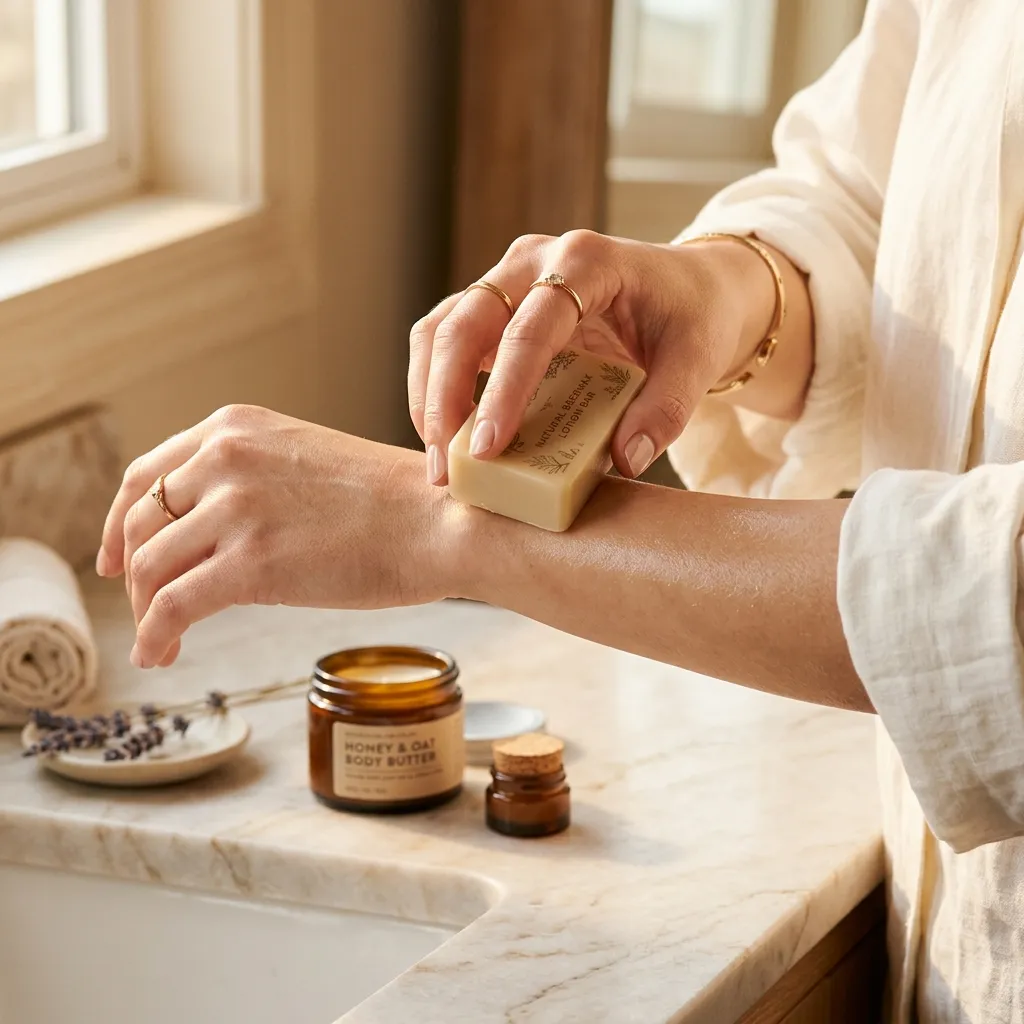
People pick up a lotion bar at the market and hesitate. It looks like a bar of soap made of wax, and the obvious worry is written on their face before they say it: is this going to leave me greasy?
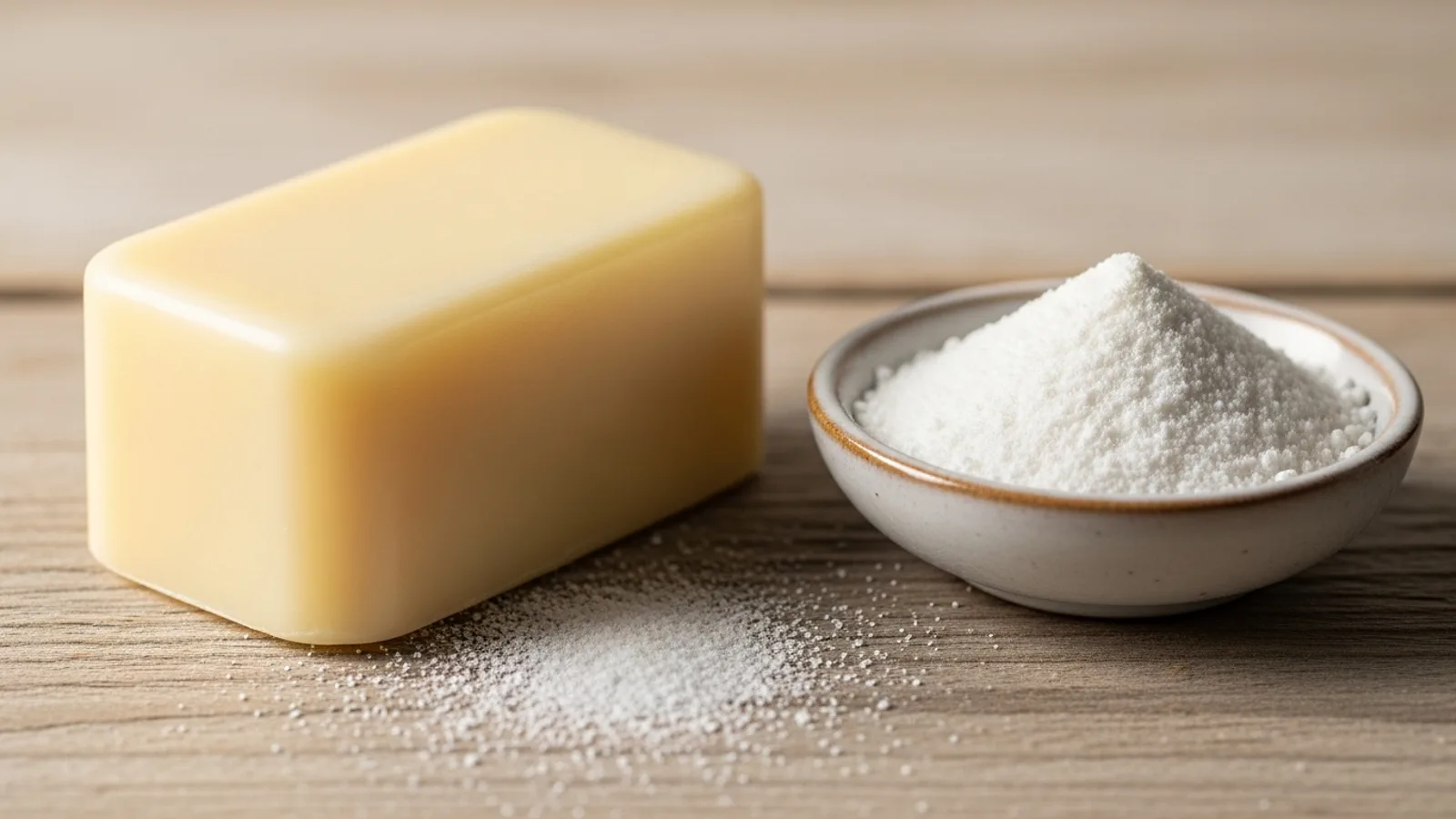
It is a fair question. A lotion bar is essentially beeswax, plant butters, and oil. Nothing in that list sounds like it absorbs. The reason ours does not sit on top of your skin is a white powder that makes up a small fraction of the recipe and does most of the work on first impression: arrowroot.
What Is Arrowroot?
Arrowroot is a starch extracted from the rhizomes of Maranta arundinacea, a tropical plant grown across the Caribbean and South America. The roots are washed, pulped, and the starch is separated out and dried into a fine powder. It has been used in food thickening for centuries and in cosmetics for about as long.
It is worth saying plainly that it is a starch and nothing more exotic. There is no active claim to make about it. It does not treat anything. It is a texture ingredient, and texture is the reason most people abandon a product they otherwise like.
The Problem It Solves
A water-free bar has to deliver oils to the skin without leaving a film that sits there. Beeswax and butters are occlusive, which is exactly what you want for holding moisture in, and it is also what makes them feel heavy if nothing balances them.
Arrowroot is highly absorbent. When the bar warms against your skin and the oils release, the starch takes up the excess sitting on the surface. What is left behind is the layer that soaks in. The oils still do their job on the skin barrier. They simply stop announcing themselves on the outside.
The secondary effect is slip. Starch particles reduce drag, so the bar glides rather than dragging across dry skin. That matters most on the places people actually use it: knuckles, elbows, heels, and cuticles.
Why Not Cornstarch or Talc?
Cornstarch is the obvious cheaper substitute and it does absorb. We do not use it for two reasons. It has a coarser particle structure that can feel chalky as it warms, and corn is a common enough sensitivity that it is not worth the risk in a product aimed at people with reactive skin.
Talc absorbs well and feels wonderful. It is also a mined mineral with a contamination history I have no interest in explaining to a customer. Arrowroot is a plant starch with none of that baggage, and it performs.
Where You Will Find It
Arrowroot is in every lotion bar we make, including the unscented bar we formulate for sensitive skin. It is not in the honey, obviously, and it is not in the lip balm, where a matte finish is the last thing anyone wants.
That is the honest summary of a minor ingredient. It is not the reason the bar works. Beeswax and the butters are. But it is very likely the reason you will keep using it.