When you work with bees, you gain a deep respect for stability.
Honey does not spoil. Beeswax does not rot. The hive is designed with intention. Nature builds systems that preserve themselves.
That perspective shaped how I began thinking about skincare.
One of the most common questions I receive is about preservatives. People often ask whether preservatives are harmful, whether "preservative-free" means better, or whether they should avoid products that contain them.
The truth is more nuanced than marketing headlines.
The Purpose of Preservatives
Preservatives exist for a reason. They are not randomly added. They solve a very specific problem.
And understanding that problem changes how you look at skincare.
Preservatives are used in cosmetic formulas to prevent the growth of bacteria, mold, and yeast. Water creates an environment where microbes can thrive. If a product contains water, it must contain a preservation system. Without protection, a cream or lotion could become contaminated and unsafe within days or weeks.
In a jar of lotion that is opened repeatedly, that risk increases. So formulators add preservatives to prevent spoilage and protect the user.
In that sense, preservatives are there for safety.
Modern preservatives are regulated and tested. Many are considered safe within approved concentrations. Without them, most conventional skincare products would not survive manufacturing, shipping, or time on a bathroom shelf.
The Deeper Question
The question is not whether preservatives have a purpose. They do.
The deeper question is why they are necessary in the first place.
The answer is water.
When I first began studying formulation, I realized that the need for preservatives is directly tied to the presence of water. If you remove water, you remove the microbial growth environment. If you remove that environment, you often remove the need for synthetic preservatives.
That realization was important to me.
As a beekeeper, I am used to working with materials that are naturally stable. Honey resists microbial growth because of its low water content and natural properties. Beeswax is inherently protective. These materials do not require artificial stabilization.
A Different Starting Point
When I started formulating skincare, I asked myself whether I could build something stable without adding layers of preservative chemistry.
The answer was yes, but it required carefully curating the structure of the formula.
Water-based skincare is built around dilution. Water-free skincare is built around oils, waxes, and butters. Oils do not support microbial growth in the same way water does. Without water, the formula does not need to defend itself from the same risks.
Many people assume that "no preservatives" automatically means safer. That is not always true. If a product contains water and does not contain an adequate preservation system, it can become dangerous. Mold and bacteria are far more harmful than properly used preservatives.
So I never recommend avoiding preservatives blindly. I recommend understanding why they are there.
Two Paths in Formulation
There are two paths in skincare formulation.
One path includes water. That path requires preservatives, emulsifiers, and stabilizers. It creates lightweight creams and lotions that absorb quickly and feel familiar.
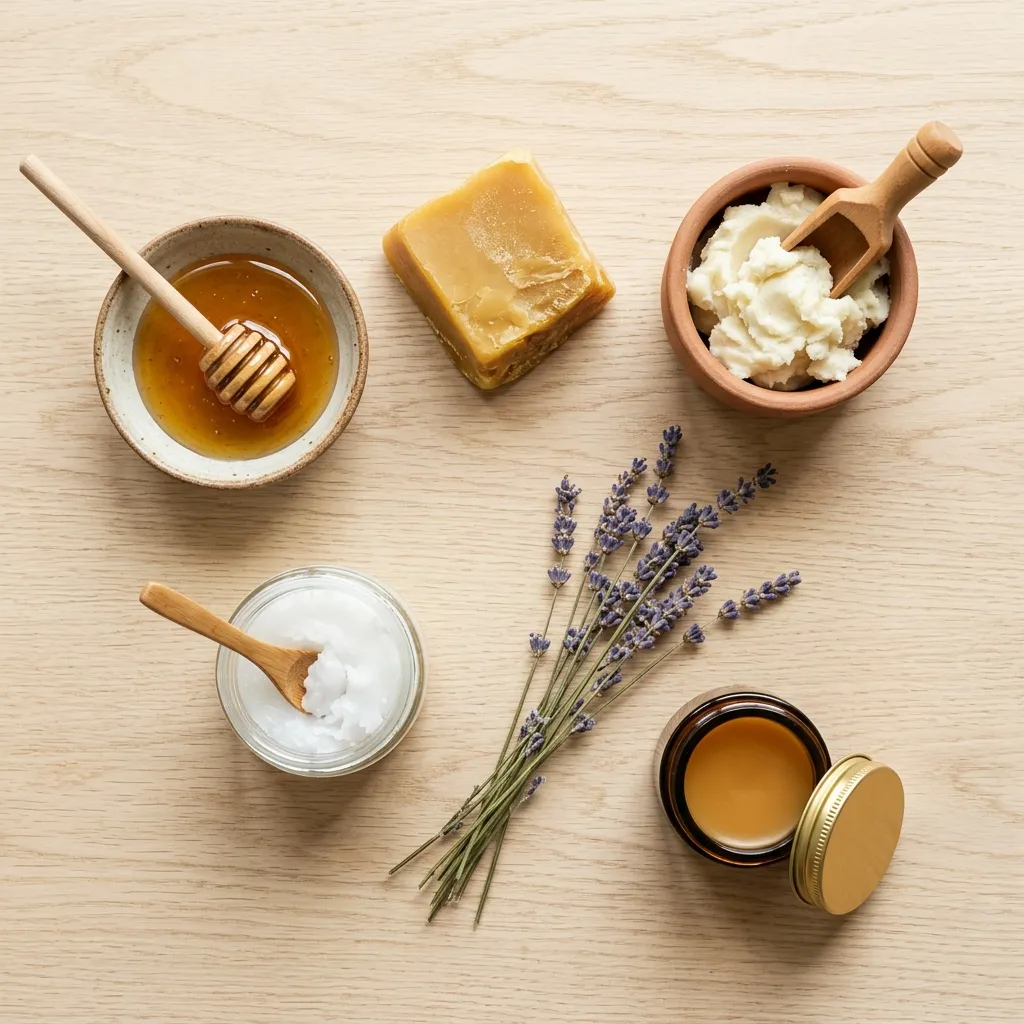
The other path excludes water. That path builds with concentrated oils and waxes. It often eliminates the need for synthetic preservatives because there is no water to protect ingredients from.
Neither path is automatically right or wrong. They are different design philosophies.
Why I Choose Simplicity
The concern I often hear is this: if preservatives are regulated and safe, why avoid them?
For me, the answer is not about fear. It is about simplicity.
If I can create a stable product without adding a preservation system, I prefer that simplicity. Fewer ingredients mean fewer variables. Fewer variables mean less potential for sensitivity in those who already struggle with reactive skin.
Many customers who find their way to my products have experienced irritation with conventional formulas. Sometimes it is fragrance. Sometimes it is preservatives. Sometimes it is simply too many ingredients layered together.
When I remove water from a formula, I remove the need for certain supporting chemicals. The ingredient list becomes shorter. More direct. More intentional.
Stability by Design
Another concern people have is whether water-free products are truly safe without preservatives.
The safety of a formula depends on its structure. A properly designed anhydrous formula, meaning one without water, does not support microbial growth in the same way a water-based one does. That does not eliminate the need for careful sourcing and clean manufacturing practices, but it fundamentally changes the preservation requirements.
Preservatives exist because water exists in most skincare. They are a response to dilution. They protect products that would otherwise be unstable.
If you choose a water-based cream, you should want it to be preserved properly. That is responsible formulation.
If you choose a water-free balm, you may not need that preservation layer at all.
The Hive Mindset
When people ask me whether my products contain preservatives, I explain it this way: my formulations do not require synthetic preservatives because they do not contain water. They are built to be stable by design.
That design reflects how I think about bees and about skin.
The hive is structured for protection. The materials are purposeful. Nothing is added unless it serves a role.
I try to carry that same mindset into Goodfriend Honey Co.
I am not trying to scare anyone away from conventional skincare. I am trying to offer an alternative for those who want simplicity, concentration, and minimal ingredient lists.
If you use a water-based product and it works beautifully for you, that is wonderful. If you have struggled with irritation or complexity and are curious about fewer ingredients, water-free skincare may feel different.
Preservatives are not villains. They are solutions to a formulation choice.
I simply chose a different starting point.
And that choice allows me to build products that are stable, concentrated, and intentional without relying on layers of preservation chemistry.
That is what it means for your skin.